
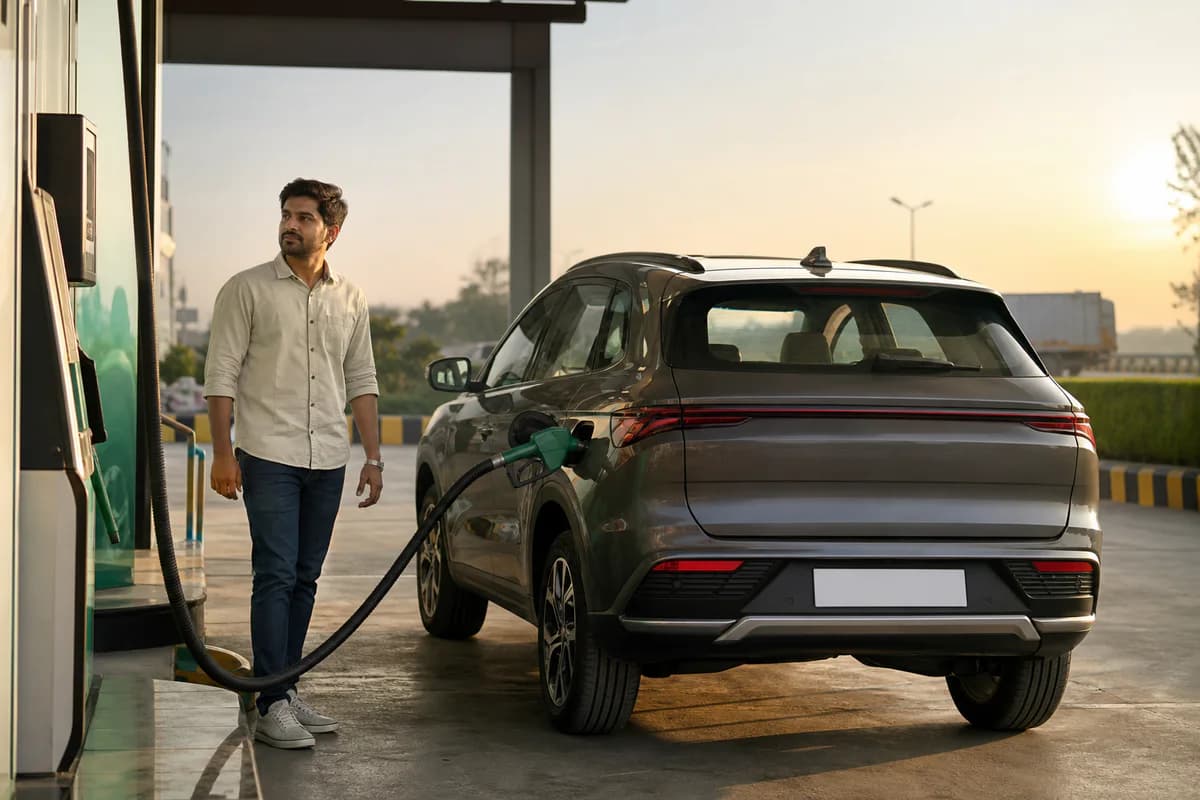
The insurance question now has an on-the-record answer from every institution that touches it: the government's fact-check unit, the fuel and automobile industry bodies, the ministry's published service record and an insurer's own public statement. This briefing assembles that record in one place, together with the paperwork that keeps a policyholder's claim well documented.
The fact-check on the record
In June 2026, posts circulated claiming that using E20 could lead to rejection of vehicle insurance claims. The Government of India's PIB Fact Check unit called the claim fake in a post of 16 June 2026: motor insurance policies remain valid with the use of E20 fuel, and such claims should be verified through official sources before being shared or acted on, the post is quoted in full in The Statesman's report.
The position did not stand alone. The Ministry of Petroleum and Natural Gas had set out the government's response to E20 concerns in its clarification of 12 August 2025, and ARAI's validation note of 4 July 2026 records the structured durability and performance testing behind E20-compatible vehicles, the same two documents every FuelSaathi national answer links to.
Industry's answer, in one sentence
The joint statement issued by ARAI, FIPI and SIAM on 30 August 2025 addresses the insurance question directly: “Allegations that E20 affects insurance and warranty are baseless. Government and insurers have clarified that insurance remains fully valid.”
That sentence carries the testing agency, the oil-industry federation and the automobile manufacturers' body together, on the record, in a published statement.
What the insurer itself put on the record
The episode that raised the question is worth reporting precisely. On 9 June 2026, a blog post on ICICI Lombard's website, later edited, said that using a fuel a vehicle was not made for could be treated as improper use or negligence, and that rejection was possible. The line spread quickly, as Hindustan Times Auto and Business Standard both record.
On 15 June 2026 the company issued a public clarification, quoted in full in the insurance press: “ICICI Lombard General Insurance reaffirms that motor insurance policies remain fully valid with the use of E-20 fuel. We further clarify that we do not treat usage of E-20 fuel in older vehicles as negligence.” Its claims statement in the same reports goes further: the type of fuel used is not a determining factor in claim admissibility, and “if a claim is admissible with conventional fuel, it is equally admissible with E-20 fuel”.
The causation record
Any repudiation that blames E20 for a loss has to stand against the ministry's published service record. At the government-industry briefing of 4 July 2026, Maruti Suzuki reported 2.84 crore vehicles serviced in FY 2025-26, more than 1.5 crore of them over three years old and therefore not E20-certified at manufacture, with no E20-related corrosion, wear or component-life damage reported from the field.
The ministry's written reply in the Lok Sabha on 23 July 2026 states the conclusion in its own words: manufacturer service data confirm no abnormal corrosion, wear or reduction in vehicle life due to E20 fuel, and manufacturers continue to honour warranty obligations for vehicles using it.
What still decides a claim
None of this makes a motor policy pay every loss, and the record does not say it does. Claims are decided by the cause of loss and the policy's own terms, the position insurers themselves state. Standard motor policies, as the insurance press sets out, exclude wear and tear, depreciation, mechanical or electrical breakdown and consequential loss, whatever fuel is in the tank.
What the record establishes is narrower and stronger: fuel type is not a ground for denial. E20 appears in none of the standard exclusions those reports list, and the insurer at the centre of the episode has said in terms that it does not reject claims merely on the basis of fuel usage.
The paperwork that protects a claim
The practical file is the same one the warranty briefing describes: keep fuel receipts and the complete service history. Those records establish what went into the tank and how the car was maintained, the two questions any assessment of cause turns on.
If a claim is repudiated, ask for the repudiation in writing, citing the specific policy clause relied on. The escalation route is published: the insurer's own grievance cell first; then Bima Bharosa, the insurance regulator's grievance portal; then the Insurance Ombudsman, whose offices take a complaint when the insurer fails to reply within a month or the reply does not resolve the matter, within one year of rejection, the conditions are set out on the Council for Insurance Ombudsmen's own site.